The Mindset Shift That Changed How I Lead
In an uncertain time, it is easy to think you have no control over anything. Yet you may have more control than you think.
Years ago, I read “7 Habits of Highly Effective People” by Stephen Covey – a book that had a big impact on my thinking and leadership. One of the ideas he introduces is the concept of the circle of control, the circle of concern, and the circle of influence. He describes how proactive people tend to focus on what they can do and influence, whereas reactive people focus their energy on things beyond their control, leaving them feeling powerless. As Covey puts it, "I am not a product of my circumstances. I am a product of my decisions."
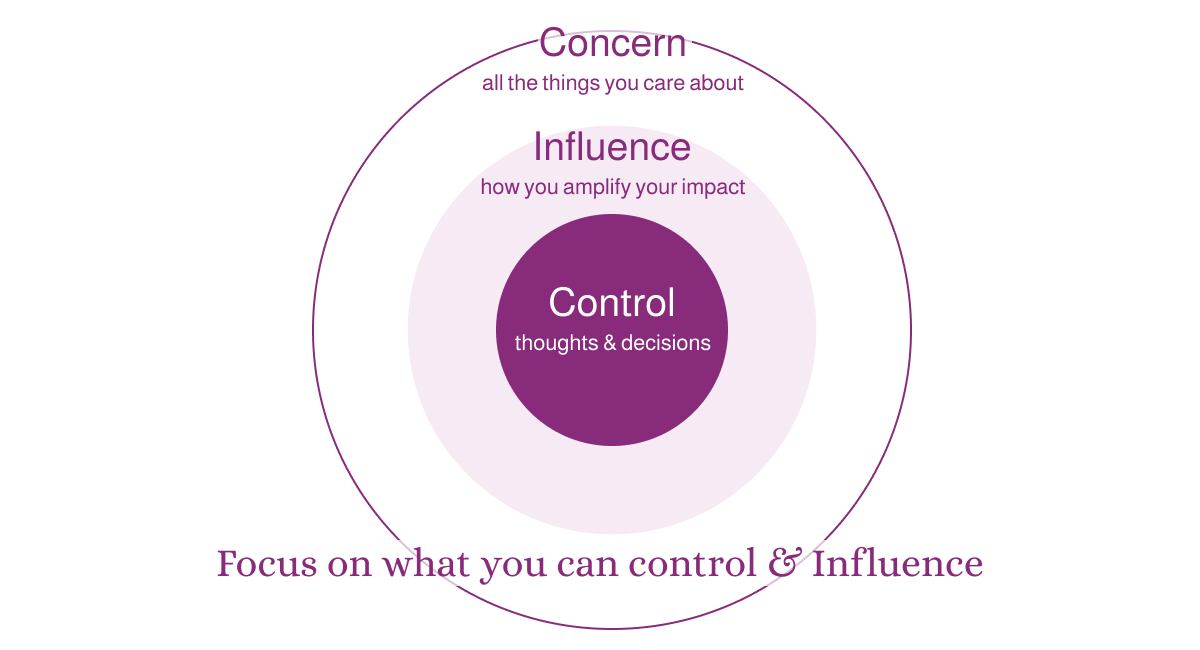
Here's how the three circles break down:
Circle of Concern
This is the biggest outermost circle. It includes all the things you are concerned about, such as the economy, the job market, your company, the prospect of AI taking your job, etc. While your list may vary, the key thing to remember is that you have control of only a small fraction of these things.
Circle of Control
The smallest innermost circle represents the things you can actually control - this includes your thoughts, emotions, decisions, actions, and behaviors. In most cases, you have control over what you wear, what you spend money on, what you do with your time, what you say, etc. While this circle may seem small compared to the circle of concern, you may realize you actually have more control than you think once you start listing things out.
Circle of Influence
This circle in the middle of Control and Concern is key. This is how you amplify your control to make an impact on the things that concern you. While you may not be able to change something on your own, you can influence others to help. The more you do this, the more your circle of influence will increase. As your influence grows, your power to make change will increase.
Again, the key is to focus on the things you can control and influence. When you fixate on what you can't change, it doesn't just drain you — it makes you seem negative, and people stop wanting to work with you.
Applying this to your work
A couple of times a year, my company would send out an engagement survey to measure employee satisfaction, likelihood to recommend the company, intent to stay, etc. My team’s scores were consistently low. They were doing great work, but their outlook was bleak. The qualitative researcher in me wanted to know what was beneath these scores.
I ran a brainstorming session where I listed out the biggest detractor themes from the survey and gave everyone space to submit anonymous feedback. After grouping the feedback into themes, I introduced the circles to my team, and we discussed the difference between what we can control and what we can influence. There was some feedback that each individual had the autonomy to act on, like cutting out unnecessary meetings and setting better boundaries with their time. There was other feedback that I, as their leader, could affect: adding more clarity to the career ladder and getting them access to the tools they needed. Lastly, there were things beyond both our control, but we could certainly influence at the company. A major theme we discussed was helping our partners better understand the value of UX beyond the UI, so we could ensure our team had a real seat at the table when strategic product decisions were made.
While the discussion didn’t solve all their problems, it helped them see that they had more control and influence than they thought. It also gave me a clearer narrative to bring back to my leaders to garner support.
I encourage you to try this exercise either with your team or on your own. I’m sharing my Figjam template in case it is useful to others. Let me know how it goes.